Madrid: Interpreting the Color of Roasted Whole Bean Coffee
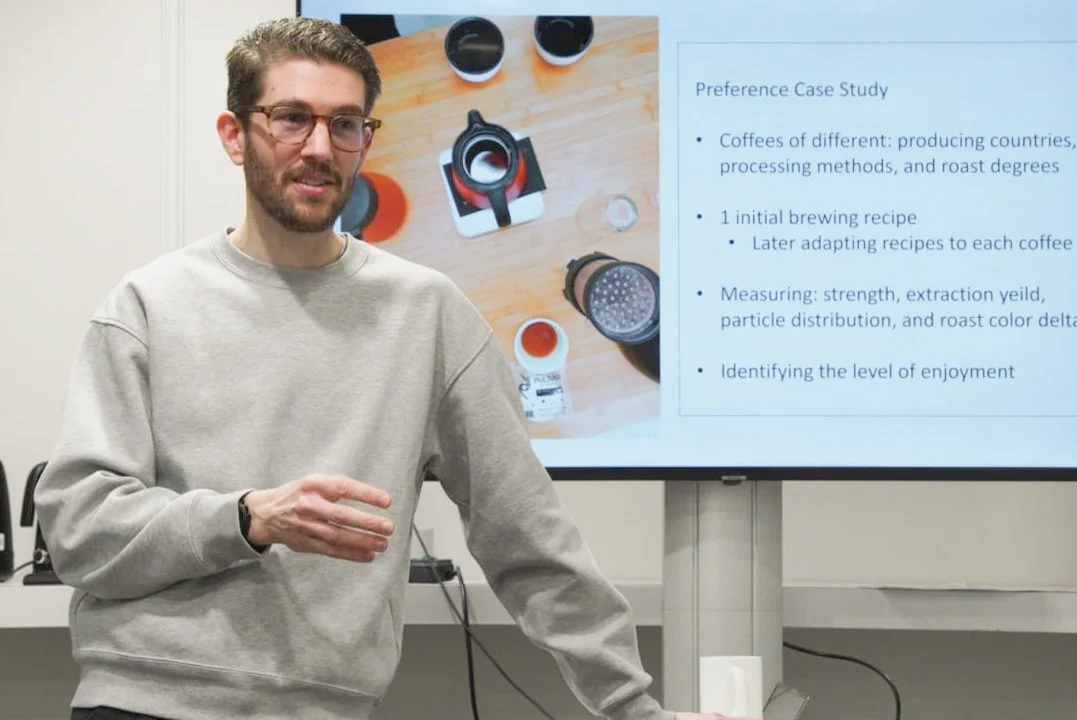
For three years I’ve been developing an idea that remains divisive within the coffee industry: roast color is the most reliable indicator of roast quality. This is why I travelled to Madrid Coffee Fest to share, for the first time, my presentation titled Interpreting Roast Color. The presentation examined how a single color measurement cannot determine taste. Yet aggregated data across origins, processes, and roast degrees reveals consistent structural patterns.
Outside of my presentation, most of my time at Madrid Coffee Fest was spent in conversation with roasters, baristas, educators, consultants, and equipment manufacturers. I was interested in understanding how different companies approach consistency: which metrics they prioritize, how they define roast degree, and what flavor profiles they aim to produce for their customers. What became clear in Madrid is that measurement and variability remain divisive topics within the industry.
“There are too many variables to develop a consistent product — variety, moisture content, processing methods react differently even under the same roasting conditions.”
“As a consultant, I don’t recommend measuring color — weight loss is more relevant to predictable roast degrees.”
“Measuring extraction isn’t necessary. My palate is sufficient to determine quality.”
This is not the first time I’ve heard opinions such as these. And while I agree, coffee is complex and agricultural variability is real, I do not believe complexity eliminates the need for structure. Structure replaces uncertainty with defined variables and measurable feedback loops.
As an example, at one booth three different coffees were available to sample. One coffee displayed clarity, balanced sweetness, and integrated acidity (Sample A). Another was noticeably astringent, dry, and lacked cohesion (Sample B). I asked which coffee had received the most positive feedback. The answer was Sample A. I was told Sample B needed a roast profile adjustment. We ended up speaking at length about measurable relationships between roast color, solubility, and cup balance. Below are color measurement results from those exact coffees.
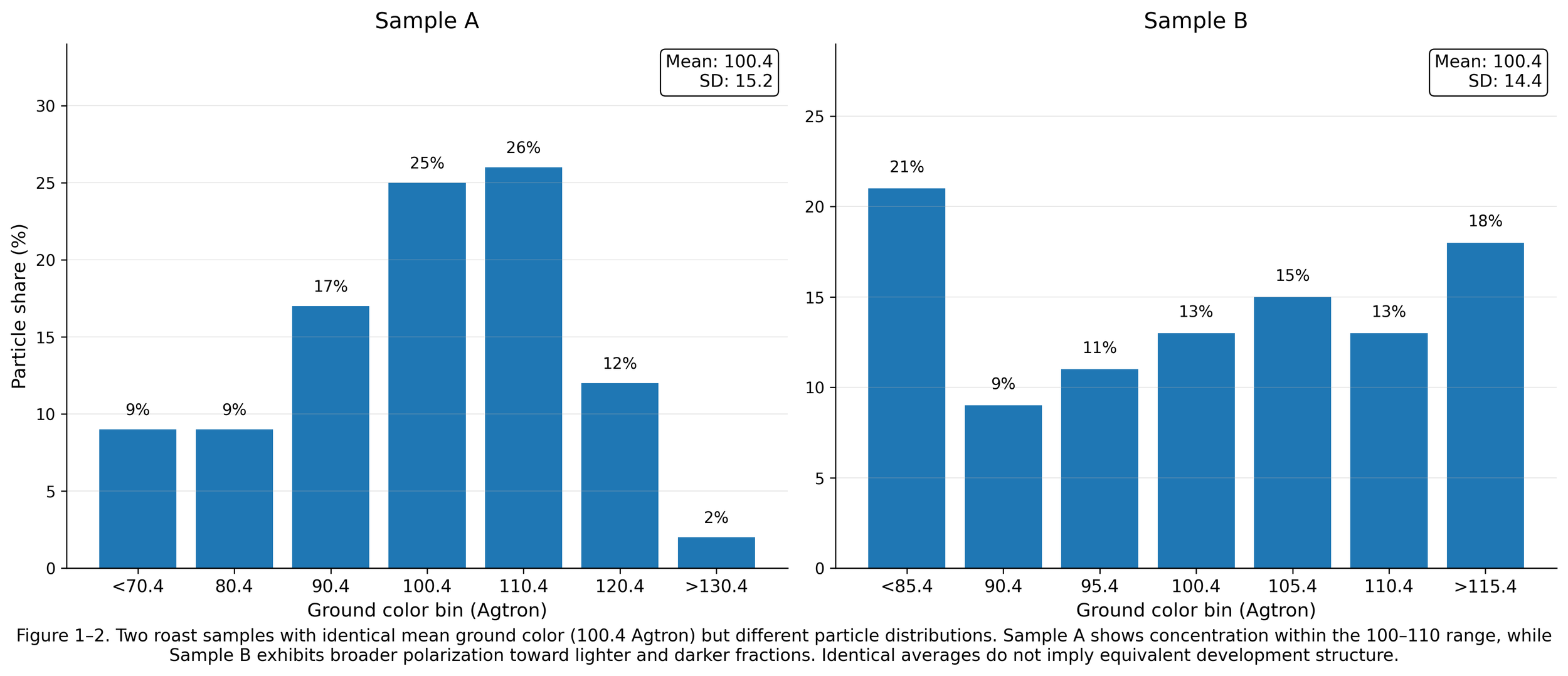
Data did not replace sensory evaluation: it clarified it. Even though both coffees have the same mean color measurement of 100.4, their development structures are different. Sample B showed competition between its lighter and darker fractions — a structural imbalance that translated directly into a lack of flavor cohesion.
The Madrid conversations reinforced a broader conviction: that no step of the coffee value chain exists in isolation. Green composition influences roast development. Roast development influences solubility. Solubility constrains extraction. Extraction shapes sensory perception. Sensory perception informs purchasing and pricing decisions, which in turn influence production planning at origin. Each stage interacts with the others.
Regarding Coffee is built around questions like these — examining color analysis, flavour balance, harvest seasonality, and roasting decisions as interconnected variables rather than isolated techniques. The goal is to remove chance from the equation and sharing methodical approaches to help professionals improve consistency and clarify flavour preferences. Because without shared definitions and measurable reference points, consistency becomes accidental — and accidental consistency does not scale.
